June 30, 2026
Understanding Air Quality: What Pacific Northwesterners Need to Know About Wildfire Smoke
 Wildfire Smoke and Your Health: What You Need to Know
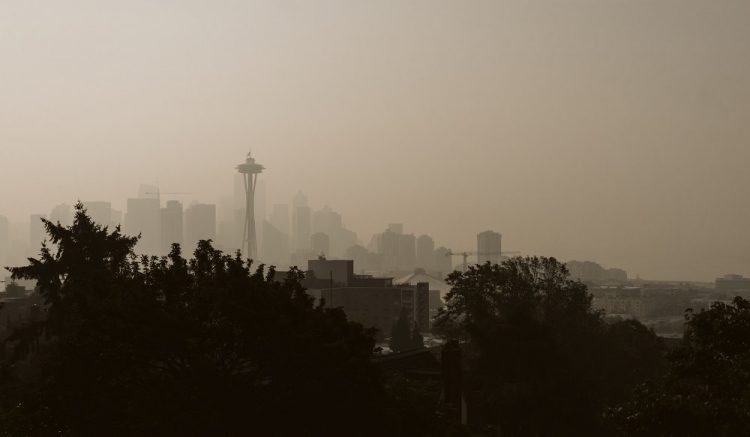
Wildfire season is here, and while air quality in the Pacific Northwest is safe most of the time, many of us still remember October 2022, when Seattle briefly ranked as the most polluted city on Earth. That kind of event is a good reminder that a little preparation goes a long way.
Know When to Stay Inside
Your senses are often your first warning system. If the air smells like a campfire, if you notice a haze outside your window or if the sky has taken on an eerie orange, yellow or red tint, it’s time to head indoors and stay there.
What Wildfire Smoke Actually Does to Your Body
Wildfire smoke is more than just an unpleasant smell. It contains tiny particulates, far smaller than the width of a human hair, that can travel deep into your lungs and enter your bloodstream, where they worsen inflammation and put extra strain on your heart and lungs. The smoke also contains harmful gases, including carbon monoxide, that add to those health risks. According to a 2021 study from the Scripps Institution of Oceanography, the particulates in wildfire smoke may be up to 10 times more harmful to human health than similar fine particles from other combustion sources.
UW Department of Environmental and Occupational Health Sciences research notes that wildfire smoke doesn’t cause entirely new diseases, but it can make existing conditions significantly worse, particularly asthma and cardiovascular disease.
Who Needs to Be Extra Careful
While no one benefits from breathing smoky air, certain groups face a much higher risk and should take precautions earlier and more seriously:
- People with lung diseases like asthma or COPD
- Those with respiratory infections
- Anyone with a history of heart attack or stroke
- Older adults and children
- People with lower incomes, who are more likely to face greater exposure and have less access to healthcare or protective measures
The Center for Disease Control also notes that symptoms of smoke exposure to watch for include coughing, shortness of breath, wheezing, chest pain, stinging eyes, scratchy throat, runny nose, headaches, fatigue and a fast heartbeat. If you or someone around you experiences these, take them seriously.
How to Protect Yourself
Outdoors: Limit the time you spend outside and avoid strenuous activity. If you must go out, a well-fitted N95 respirator mask provides meaningful protection. (A loose surgical mask doesn’t offer the same benefit against fine particulates.) For guidance on outdoor activity thresholds, check the Air Quality and Outdoor Activity Guidance for Schools, a resource from AirNow, a program of the EPA.
Indoors: Keep all windows and doors closed. If you have central air conditioning, run it, but make sure the fresh-air intake is closed and the filter is clean. In the car, switch your ventilation to the recirculate setting so you’re not pulling in outside air.
To further improve indoor air quality, consider running a HEPA portable air cleaner, using your HVAC system’s filtration, or building a DIY box fan filter (a furnace filter taped to a box fan is surprisingly effective). In the meantime, avoid anything that adds more particles to the air inside your home: candles, incense, wood fires, essential oil diffusers, aerosol sprays, broiling or frying food, heavy use of gas stoves or smoking indoors.
Understanding the Air Quality Index (AQI)
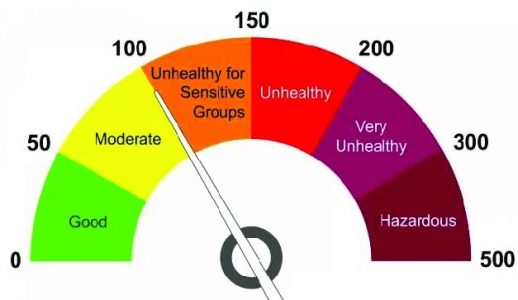
The AQI is a 0-500 scale that tells you how clean or polluted the air is on any given day. Here’s a practical breakdown:
- 0-100: Generally safe. (Note: 0-50 is “Good”; 51-100 is “Moderate.” Most healthy adults won’t notice effects, but very sensitive individuals may.)
- 101-150: Unhealthy for sensitive groups. People with heart or lung conditions, older adults and children should reduce outdoor activity.
- 151-200: Unhealthy for everyone. Most people will begin noticing symptoms like a scratchy throat, runny nose or eye irritation.
- 201-300: Very unhealthy. Health risks are elevated for all people, not just those with underlying conditions.
- 301 and above: Hazardous. At this level, everyone is likely to experience health effects. Move all activities indoors if at all possible.
How to Check Air Quality
For current and forecasted conditions in Washington, the Washington Smoke Information website (also known as the Smoke Blog) and the WA Ecology Washington Air Monitoring Network are your best local resources. You can also check airnow.gov or most smartphone weather apps, which display AQI in real time. The Washington Air Quality Guide for Particle Pollution provides a helpful color-coded summary of health recommendations for each AQI level.
The bottom line: smoky skies don’t have to mean a health crisis if you know what to watch for and how to respond. A few simple steps, staying informed, filtering your indoor air and limiting time outside during poor air days, can make a real difference for you and the people you care about.
Support the People Protecting Our Air
Wildfire season is also a reminder of the essential work done by firefighters and the environmental and public health organizations working year-round to reduce the impact of wildfires on our communities.
If this guide resonated with you, consider turning that concern into action. Through the UW Combined Fund Drive (UWCFD), you can make a one-time gift or set up a monthly payroll deduction to support a nonprofit doing meaningful work on wildfire mitigation, air quality or environmental health. Search by organization name or cause area to find one that feels right to you.
Can’t find the organization you’re looking for? Reach out to the UWCFD team at uwcfd@uw.edu and they’ll work to get them added.
Your gift makes a difference.